The Feds Are Rewriting the Rules on Autonomous Vehicles — and the Cybercab Is Already in Production
Published by Auto Auto | June 2026

The regulatory ground underneath autonomous vehicles is shifting fast — and it’s shifting in the direction of the Cybercab.
In a move with sweeping implications for Tesla and the broader robotaxi industry, NHTSA under the Trump Administration’s Department of Transportation has commenced formal rulemaking to eliminate the federal mandate for manual brake pedals in vehicles designed to be driven exclusively by automated driving systems. The specific target: Federal Motor Vehicle Safety Standard (FMVSS) No. 135, which currently requires light-duty vehicles to have traditional manual braking systems.
At the same time, NHTSA is simultaneously moving to amend FMVSS No. 102 (transmission shift displays), No. 103 (windshield defrosting), No. 104 (windshield wipers), and No. 108 (lighting systems) — all standards written when the assumption was that a human would always be sitting behind a wheel. The agency is now formally acknowledging that class of vehicle no longer describes what’s coming.
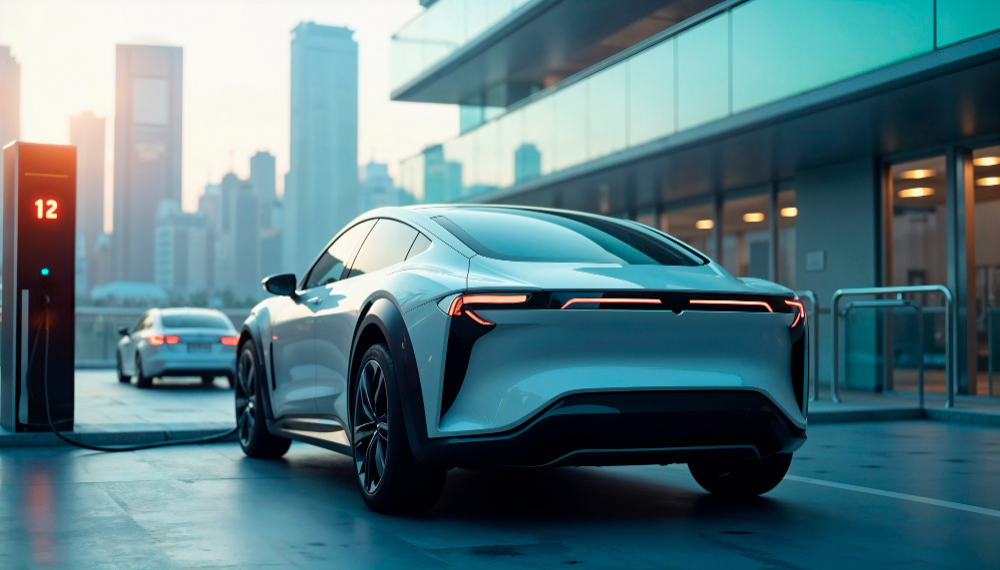
And what is coming? The Tesla Cybercab — now in mass production at Gigafactory Texas — was already spotted in early 2026 carrying an official federal compliance sticker, suggesting Tesla may have engineered around existing FMVSS requirements without needing the exemptions that have boxed in competitors like Waymo and Zoox.
What NHTSA Is Actually Changing
The FMVSS No. 135 revision is the most consequential of the current rulemaking cycle. Here’s what it does and doesn’t change:
| What Changes | What Stays the Same |
|---|---|
| Hand- and foot-operated brake controls no longer required for vehicles designed never to have a human operator | All vehicles must still meet the same stopping distance performance standards — just verified through alternative testing procedures |
| AVs that retain manual controls continue to follow existing rules unchanged | NHTSA retains full defect enforcement authority and oversight of recalls for ADS behavior |
| Manufacturers can self-certify compliance, removing the exemption bottleneck that previously slowed deployment | NHTSA is separately developing real-world safety performance requirements for ADS vehicles — the physical braking rule and operational safety rules are two different tracks |
NHTSA Administrator Jonathan Morrison didn’t mince words about the intent: “We are at the cusp of the greatest technological revolution in vehicle technology since the innovation of the Model T. If we want America to lead the way, we have to reimagine our regulatory framework. That’s why under Secretary Sean Duffy’s AV Framework, NHTSA is tearing down pointless barriers to innovative designs while strengthening the fundamental safety requirements that matter.”
Secretary Duffy himself framed it as a national security issue: “I want the technology to be developed in America, I want the jobs in America, and I want the rest of the world to use American technology.”
Tesla’s Regulatory Advantage: No Cap, No Exemption Needed

Here’s a critical detail that separates Tesla from every other AV manufacturer in the regulatory race.
Companies like Waymo and Zoox have historically needed NHTSA exemptions to deploy vehicles without standard human controls. Those exemptions are capped at 2,500 units per manufacturer per year — a ceiling that makes commercial scale effectively impossible. Zoox just became the first company to receive an exemption under the expanded program, following a lengthy negotiation process.
Tesla’s VP of Vehicle Engineering, Lars Moravy, was asked directly on X whether the 2,500-unit cap applies to the Cybercab. His answer: “No.”
Tesla designed the Cybercab to self-certify compliance with existing FMVSS standards — the same process used by every Toyota Camry and Ford F-150 sold in America. Drone footage from Gigafactory Texas confirmed Cybercab units wearing official federal compliance stickers early in the production run. If that certification holds, Tesla can scale Cybercab production without a federal production ceiling — a structural advantage no competitor currently has.
The first steering-wheel-less Cybercab unit rolled off the line in February 2026. Continuous mass production began in April 2026 at Gigafactory Texas. Tesla is producing both the no-controls version and a steering-wheel-equipped variant for markets that still require manual controls.
The State-by-State Picture: A Patchwork That Still Matters
Federal rulemaking sets the floor for vehicle equipment standards, but states control whether and how AVs can actually operate on their roads. That’s where it gets complicated — and where the Cybercab’s rollout geography will be determined.
As of mid-2026, there is still no unified federal law governing AV operations. In the first months of 2025 alone, lawmakers in 25 states introduced 67 bills covering testing rules, insurance requirements, data reporting, and operator licensing. Here’s the current landscape for the states that matter most to a Cybercab fleet operator:
| State | Steering Wheel / Controls Required? | Current AV Status |
|---|---|---|
| Texas | No — AVs treated largely the same as human-driven vehicles under highly permissive statutes | Active Waymo robotaxi service in Austin. New law grants TxDMV authority to approve driverless operations. Tesla self-certified Cybercab FSD as SAE Level 4 compliant in Texas. Leading launch state for Cybercab fleet. |
| Arizona | No — one of the most permissive AV frameworks in the country | Waymo operating commercially in Phoenix since 2018. Major AV testing hub. New legislation enacted in 2025 defines ADS, adjusts liability, authorizes operation under specific conditions. |
| California | Permitted under specific conditions — currently updating regulations to require safety cases and redefine failure reporting | Waymo active in SF and LA. New law (effective July 2026) allows law enforcement to issue non-compliance notices directly to AV operating companies. Requires $5M insurance coverage for AVs. |
| Florida | Generally permissive — allowed AV operation on public roads since 2012 | Waymo launched commercial service in Miami in 2025/2026. New legislation enacted in 2025 defines ADS and adjusts liability. Flagged as a Cybercab expansion market. |
| Nevada | No steering wheel required — state actively permits fully driverless operations with DMV licensing | New legislation enacted in 2025. Insurance minimums are $1.5 million for AV commercial operations. Early regulatory adopter. |
| North Carolina | Currently requires compliance with all existing vehicle equipment laws — including steering systems if a human could operate the vehicle | Has a legal framework (NCGS §20-400–403) for fully autonomous vehicles since 2017. Established a Fully AV Committee under NCDOT. AVs must comply with federal standards AND existing NC vehicle laws. A truly steer-wheel-free Cybercab would need federal preemption or state law update to deploy commercially here. |
| Georgia | Permissive — allows autonomous operation | Waymo active in Atlanta. Expanding AV footprint with planned 2026 market launches nearby (Nashville). |
| New York / New Jersey / Illinois | Bills under consideration — no current commercial driverless authorization | Regulatory environment is cautious. AV legislation pending but not enacted. Not near-term Cybercab markets. |
North Carolina: Where Things Stand Right Now
For those of us operating in the Raleigh-Durham corridor — the target market for Auto Auto’s Cybercab fleet — the state picture is the critical variable.
North Carolina passed AV legislation back in 2017 (NCGS §20-400 through 20-403), establishing a legal framework for fully autonomous vehicles and creating the Fully AV Committee within NCDOT. Under that statute, a fully autonomous vehicle is defined as one whose automated driving system handles all real-time control without any occupant input — and the operator is not required to hold a driver’s license when the ADS is engaged.
That’s progress. But the same statute requires that AVs comply with all applicable federal and state laws — meaning if existing NC vehicle equipment law requires steering systems and a human operator could theoretically be present, that compliance burden still exists. A truly no-controls Cybercab would require either federal preemption (NHTSA overriding state equipment standards as it expands the FMVSS revision process) or an update to NC’s own statutes.
The state has also preempted local municipalities from passing AV-specific laws of their own — so Raleigh and Durham can’t freelance regulations. That’s actually a useful protection for fleet operators. But NC has not yet enacted the explicit no-controls authorization that Arizona and Texas have. This is the regulatory gap Auto Auto is watching closely, and it’s exactly why NHTSA’s federal-level rulemaking matters as much to Raleigh as it does to Austin.
The Federal Preemption Question
One underreported aspect of this rulemaking push: the Trump Administration is not just rewriting FMVSS standards — it’s signaling intent to prevent a harmful patchwork of state laws from blocking AV deployment. Transportation Secretary Duffy has explicitly raised preemption as a priority, essentially warning states that federal equipment standards will supersede stricter local restrictions.
If NHTSA finalizes the FMVSS amendments and federal preemption is upheld, a Cybercab that meets federal safety standards could potentially operate in states like North Carolina even before those states update their own statutes. This is still a legal question that will likely end up in court, but it’s the direction the current administration is pointing.
States that have already enacted permissive AV legislation — Texas, Arizona, Nevada, Florida, Georgia — won’t need to wait for that fight. States like North Carolina, with frameworks that reference federal compliance, may find the federal updates do the work for them automatically.
What This Means for Cybercab Fleet Investors

For investors and early fleet operators, the regulatory calendar is now the most important timeline to track — not the production timeline. Tesla solved the production problem: Gigafactory Texas is running. The compliance sticker is on the vehicle. The question is which states clear the runway for commercial passenger operations first.
Here’s the honest framing:
- Texas and Arizona are cleared for takeoff. Commercial Cybercab deployment in Austin and Phoenix has the fewest remaining regulatory barriers. If you’re an investor looking at near-term cash flow from a Cybercab fleet, these are the launch markets.
- North Carolina is close but not there yet. The existing statute is a foundation, not a green light. The faster NHTSA’s federal preemption argument gains ground, the faster the Raleigh-Durham market opens up — and when it does, first movers who’ve already built fleet infrastructure will have an enormous advantage.
- Florida is a strong secondary market. With Waymo already operating in Miami and state legislation enacted in 2025, Florida is positioning itself as an AV-friendly state. Cybercab expansion there is a realistic 2026–2027 target.
- The self-certification path is a structural moat for Tesla. No production cap. No multi-year exemption process. Every competitor is fighting for 2,500 units per year from NHTSA. Tesla may have no ceiling.
The unsexy truth: the biggest risk to Cybercab fleet returns in 2025–2026 isn’t the hardware — it’s the state-by-state regulatory calendar. But that calendar is moving faster than most investors realize, driven by federal rulemaking momentum and competitive pressure from Waymo’s commercial expansion into new cities.
Auto Auto is building the fleet infrastructure for the Raleigh-Durham market now — before the regulatory green light turns on — because by the time it does, the operator with vehicles, software integrations, and local brand recognition will be the one capturing the market. That’s the first-mover logic.
Want to Get Positioned Before the Market Opens?
Auto Auto is building the first Cybercab fleet in the Raleigh-Durham market. We’re accepting investor inquiries now — before commercial operations launch.
Legal Disclaimer: The information in this post is provided for general informational and educational purposes only. It does not constitute legal, financial, or investment advice. Regulatory environments for autonomous vehicles are evolving rapidly and vary significantly by state and locality. Auto Auto makes no representations regarding the accuracy or completeness of regulatory information referenced herein. Readers should consult qualified legal and financial professionals before making any investment decisions. Past performance and regulatory conditions are not guarantees of future outcomes.