
What Does Cybercab Ownership Actually Look Like?
If you’re evaluating whether to purchase Tesla Cybercabs for your fleet, you’re asking the right question: what does day-to-day ownership actually entail? The answer is more complex than the hype, and understanding the reality is essential for fleet operators considering this investment.
The Two Ownership Pathways
Tesla’s robotaxi model doesn’t assume you want to personally drive a Cybercab. Instead, the company has outlined two primary ownership structures:
Network Integration Model: You purchase Cybercabs outright, and Tesla adds them to its national robotaxi network. When your vehicles are being used, Tesla’s dispatch system handles ride requests, customer interactions, and payments. You receive revenue sharing from every completed ride. When the vehicle isn’t needed by the network, it returns to your control for personal use, maintenance, or storage.
Independent Fleet Model: You purchase vehicles and operate them independently under your own branding or lease them to third-party mobility operators. You retain full control over pricing, availability, and customer experience. You own the customer relationship but you also own every operational headache.
For most fleet operators, the network integration model is more appealing because Tesla handles customer acquisition, dispatching, and brand management. But that appeal comes with loss of control.
The Daily Reality: Infrastructure and Charging
Ownership of autonomous vehicles is not ownership of a vehicle in the traditional sense. You’re not driving it home. You’re not maintaining it yourself. You’re managing a piece of distributed infrastructure.
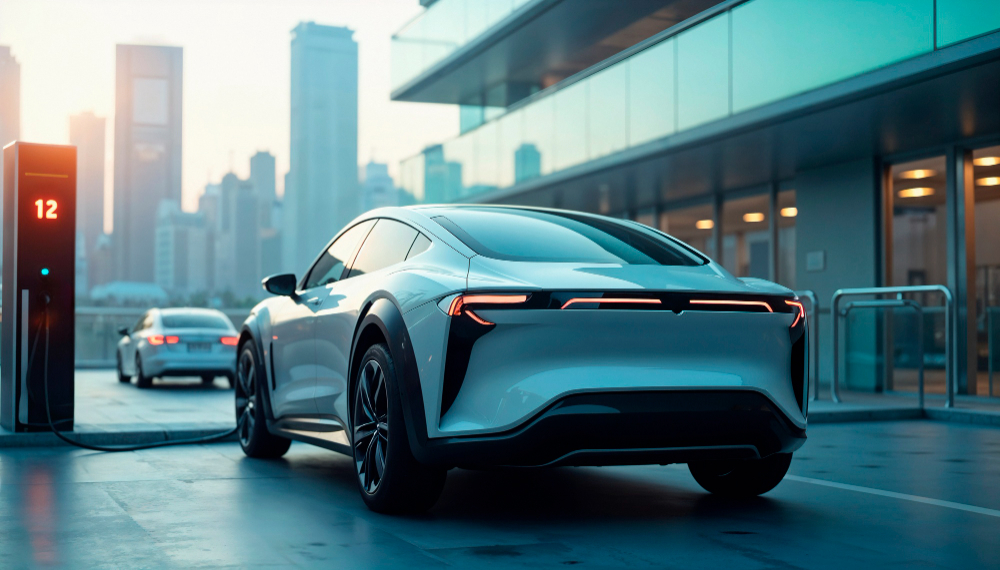
Every Cybercab you operate needs charging infrastructure. Tesla’s 48 kWh battery provides approximately 200 miles of range, depending on driving patterns. In dense urban environments where most robotaxi work occurs, vehicles need frequent charging. This means you need:
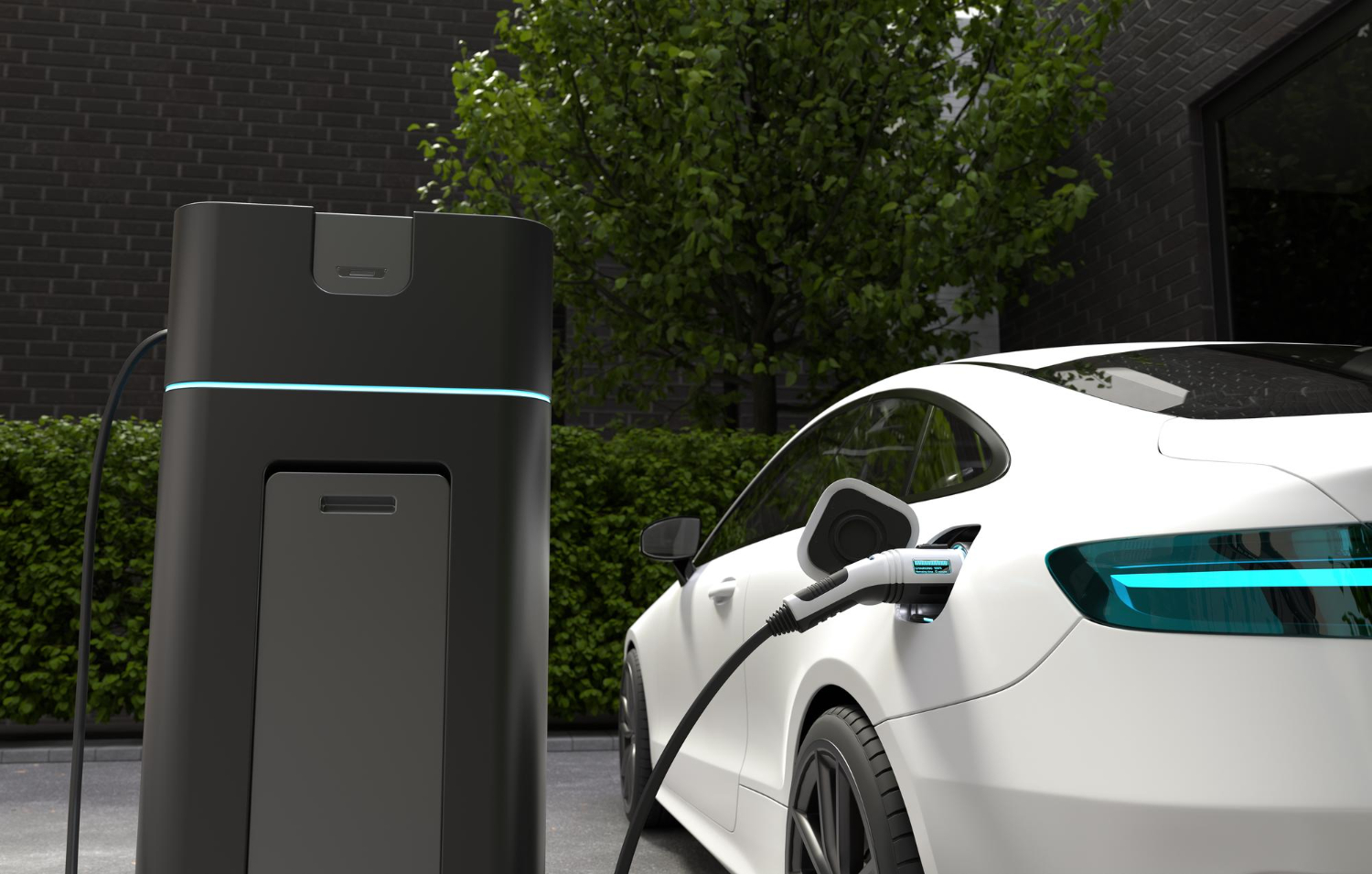
Depot charging stations: Level 2 or DC fast charging equipment capable of servicing your entire fleet. A 10-vehicle fleet operating 16 hours per day will need substantial charging infrastructure investment. Expect $50,000 to $150,000 in charging equipment capex per location, plus ongoing electrical infrastructure upgrades.
Maintenance facilities: Even autonomous vehicles need tire rotations, battery monitoring, brake fluid checks, and eventual component replacement. Unlike human-driven vehicles, autonomous systems have different maintenance profiles. Tesla will likely provide remote diagnostics, but physical inspection and parts replacement require dedicated space and equipment.
Lot space and security: Your vehicles need a secure location when not in service. Overnight parking, weather protection, and theft deterrence are essential. A 10-vehicle fleet needs approximately 2,000 to 3,000 square feet of dedicated space, depending on local density and usage patterns.
Economics: The Cost Per Mile Equation
Tesla claims Cybercabs can operate at less than $0.30 per mile. Let’s translate what that means for your ownership model.
Vehicle acquisition: At Tesla’s $30,000 target pricing (actual production pricing may vary), a 10-vehicle fleet costs $300,000. That’s your entry capital. Assume 7-year depreciation to 40% residual value.
Operating costs (per mile): Tesla’s $0.30/mile estimate includes electricity, minimal maintenance, insurance, and network fees (if using Tesla’s platform). If correct, a vehicle completing 150 miles per day in robotaxi service generates 4,500 miles per month of billable work, requiring electricity and basic maintenance costing roughly $1,350 per month per vehicle, or about $16,200 annually per vehicle.
Infrastructure amortization: Your charging and maintenance facilities need to be amortized across your fleet. A $100,000 facility serving 10 vehicles, depreciated over 10 years, adds $1,000 per vehicle annually.
Network fees: If using Tesla’s network, expect revenue sharing in the 20-30% range (Tesla takes its cut; you keep 70-80% of ride revenue). This is not an explicit “fee,” but it functions as one.
The economics work only if utilization rates are high. Tesla’s robotaxi network can theoretically operate vehicles 16 to 20 hours per day. Each vehicle logged as “available” needs to accept rides regularly or be withdrawn from the network. Utilization below 12 hours per day makes fleet ownership economically marginal.
The Regulatory Fog
Here’s what ownership looks like today: you’re purchasing vehicles designed to be fully autonomous, but they can’t legally operate without human oversight in most jurisdictions. If you buy a Cybercab today, it arrives with a retrofitted steering wheel (yes, really—Tesla bolts a Cybertruck steering column to a fabricated mount internally). That steering wheel will likely be removed once regulatory approvals finalize, but for now, your vehicle is a part-time autonomous prototype with a bolted-on driver seat.
This matters because it affects insurance classification, operational permits, and liability exposure. A vehicle that’s nominally autonomous but carries a human driver occupies a weird regulatory gray zone. Your insurance premiums, maintenance costs, and permitting requirements may be higher than Tesla’s $0.30/mile estimate assumes.
The NHTSA investigation into Tesla’s self-certification could mandate steering wheel retrofits or limited operational zones. Worst case, it could prevent commercial deployment altogether until further regulatory clarity emerges. If you purchase today, you’re betting that NHTSA approves unrestricted Cybercab operation by Q1 2027. That’s not a certainty.
Maintenance and Component Replacement
Autonomous vehicles have different failure modes than human-driven cars. The sensors, compute hardware, and autonomous software stacks are unproven at scale in high-utilization environments.
Battery degradation: Tesla’s 48 kWh pack will decline gradually. After 500,000 miles (roughly 3-4 years of robotaxi operation), expect 10-15% capacity loss. Battery replacement costs $8,000 to $15,000 per vehicle. You don’t own this cost directly if using Tesla’s network (it’s embedded in the $0.30/mile estimate), but you do if operating independently.
Sensor and compute hardware: Cybercam’s camera arrays and compute modules may require calibration or replacement. Tesla hasn’t published service costs or expected lifespans for autonomous hardware. Industry parallels suggest $5,000 to $10,000 per incident if hardware fails.
Software updates: Autonomous driving software will be continuously updated. These updates are free but may require vehicle downtime or recalibration after installation. A poorly executed software update affecting your entire fleet could sideline your revenue generation for hours or days.
The Hidden Operational Costs
Damage and accidents: Even autonomous vehicles get hit. Whether due to human error (other drivers), sensor failures, or system mistakes, collisions will occur. Your insurance will cover most damage, but deductibles, premium increases, and downtime add up. Industry estimates suggest autonomous fleets experience 1 collision per 500,000 miles. At $0.30/mile, that’s significant operational risk.
Towing and recovery: When a Cybercab breaks down or gets stuck, recovery is expensive. Unlike Uber drivers who can restart a car immediately, autonomous fleet failures require professional recovery, diagnostics, and repairs. Expect $200 to $500 per incident.
Customer service and support: If you’re operating independently, you handle customer complaints, ride quality issues, and support tickets. If using Tesla’s network, you’re dependent on Tesla’s customer service, which has historically been inconsistent.
Realistic Timelines and Scaling
Tesla’s promise is that Cybercabs will scale rapidly and profitably. The company has promised first customer deliveries by end of 2026. If you purchase early, you’re betting on aggressive ramp. More realistically, expect:
2026-2027: Limited deployment in Austin, Texas and possibly one or two additional cities. Regulatory uncertainty constrains growth. Your 10-vehicle fleet can operate, but utilization rates may be 8-10 hours per day as network demand is uncertain.
2027-2028: If regulatory approvals finalize, geographic expansion accelerates. 10-vehicle fleets can grow to 50-100 vehicles as demand rises. Utilization improves to 12-14 hours daily.
2028-2030: Mature robotaxi market with utilization at Tesla’s assumed 16-20 hours per day. At this point, ownership economics become viable.
Early adopters face years of marginal returns while waiting for the market to mature and regulatory uncertainty to resolve.
Comparing Cybercab to Alternatives
Waymo fleet ownership: Waymo doesn’t sell Cybercabs or allow independent operators to add vehicles to its network. Waymo operates its own fleet exclusively. If you want exposure to Waymo’s technology, you invest in Alphabet’s stock, not physical vehicles.
Human-driven Uber/Lyft drivers: Operating human-driven fleets has established economics. You know driver costs, maintenance patterns, insurance, and utilization rates from years of market data. Cybercab ownership is a bet on lower operating costs not yet proven at scale.
Independent EV shuttle services: Some operators are deploying EV shuttles (Tesla Model 3/Y conversions with human drivers) in fixed routes. These have proven economics, established insurance, and immediate revenue generation. Cybercabs are more efficient but also more speculative.
The Bottom Line: Ownership Is a Bet
If you’re considering Cybercab ownership, understand what you’re actually buying: a speculative investment in a robotaxi technology that remains unproven at scale, dependent on regulatory approvals that are not yet finalized, and requiring infrastructure investment that makes sense only if utilization rates reach 14+ hours per vehicle daily.
The economics are compelling if everything goes right: low operating costs, high utilization, reliable autonomous operation, and favorable regulation. If any of those factors disappoint, you’re left with expensive vehicles in a narrow use case and limited resale value.
For fleet operators, Cybercab ownership today is not a conservative business decision. It’s a high-risk, high-reward bet on Tesla executing flawlessly on autonomy, regulation, and manufacturing.
If your business can absorb 2-3 years of marginal returns while the market matures, and if you believe Tesla will achieve autonomous dominance over Waymo, then purchasing a pilot fleet of 5-10 vehicles makes sense. Wait for regulatory clarity, test the actual economics in your market, and scale only after proving unit economics work in practice.
Contact Auto Auto to discuss realistic Cybercab ownership scenarios for your fleet: josh@autoautous.com or call 919-389-8290. We’ll help you stress-test the economics against real operational data.